
🔴 Episode 20
AI doesn't level the playing field. He tilts it.
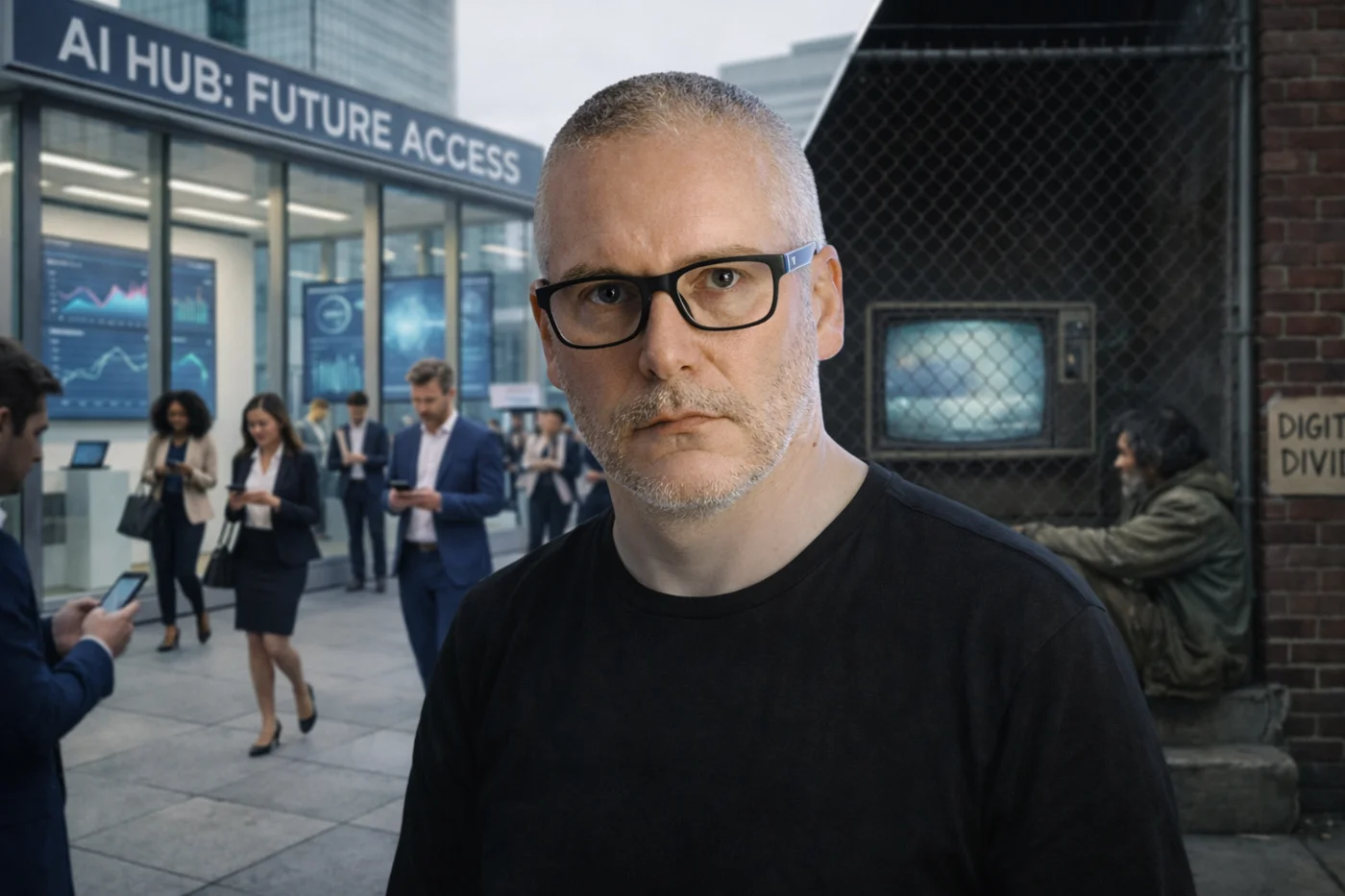
Those who have access, data, skills, capital... become stronger. Those who don't have it are left behind. And the gap is widening.
Who has access
Companies that can afford proprietary models, APIs, infrastructure. OpenAI, Google, Anthropic: APIs that cost thousands of dollars a month for intensive use. Countries that invest in AI, research, talent: USA, China, UK, but also Singapore, UAE, Israel. Individuals with skills, time, resources to exploit the tools. An entrepreneur who knows how to use ChatGPT to scale his business; a researcher with access to GPUs and datasets; a professional who can afford paid tools.
Access is not equal. And AI doesn't make it equal. It makes it more noticeable. Whoever had an advantage amplifies it. Those who were behind risk falling even further behind. The gap is not just technological: it is economic, geographical, educational.
Who suffers
Who doesn't know how AI works. Who is classified, discarded, penalized by algorithms without knowing it. Who can't contest because they don't know that an algorithm has decided. Those who don't have the data, the money, the skills to compete. A person looking for work and is filtered by an ATS (Applicant Tracking System) without ever knowing why. A loan applicant rejected by a credit scoring model with no intelligible explanation. A tenant discriminated against by a real estate rating algorithm.
Today: credit scoring, recruiting, access to services, dynamic pricing. Algorithms that decide on people who often don't even know they are being evaluated. The GDPR provides the right not to be subject to automated decisions only for decisions with significant effect, but enforcement is inconsistent. In practice, many do not know that they have been subjected to an algorithmic decision, and do not know how to challenge it.
AI amplifies what already exists
AI does not create inequality. The staircase.
If a system incorporates biases — about race, gender, age, class — automation multiplies them. A human prejudice that in the past would have affected dozens of people becomes systemic policy that affects thousands, millions. Amazon's recruiting algorithm, which was withdrawn after it was found to penalize resumes with the word "female," is one example. Facial recognition systems with higher error rates on non-white faces. Risk models that reflect historical disparities in the data. The problem isn't that AI is "racist" per se: it's that it learns from data that reflects an unequal society, and crystallizes that inequality into automatic decisions.
The skills gap
Those who know how to use AI, understand AI, govern AI... will have an advantage. Those who don't will be left behind. You don't need to become a data scientist. But you need to know what a model is, how a prompt works, when to trust it and when not to. Basic literacy is increasingly necessary.
Technology literacy is not optional. It is a requirement to participate. And not everyone gets there the same way. Schools don't teach AI. Adult education is fragmented. Those who have time, resources and a favorable context learn. Those who don't suffer. The risk is a society divided between "AI literate" and "AI illiterate", with consequences on employment, participation and rights.
What can we do
Access: free tools, open source, widespread training. Upskilling programs. Investments in disadvantaged schools and communities. Transparency: knowing when an algorithm decides on us, with what logic, with what data. Right to explanation and dispute. Context: possibility of appeal, independent audits, error correction.
And collective choice: invest in those who are left behind, not just in those who move forward. Public policies that reduce the gap instead of amplifying it. AI does not have to be an accelerator of inequality. It can be a tool of inclusion, but only if we decide and design it that way.
🔥 Your experience
Have you ever seen or experienced a situation where AI — or an algorithm — penalized someone who didn't have the means to understand or challenge?
Tell it in the comments (even without details). Less theory is needed. And more reality.
In the next episode we will talk about AGI and "singularity". Between hype and governance: how to talk about it without losing the thread.
If you want to follow the series, stay here.
From now on, AI is no longer just a question of power. It's about justice.