
🔴 Episode 2
Every technological revolution brings with it a recurring fear: "It will become too intelligent."
With AI, this fear is everywhere. And it's badly placed.
The real risk of modern Artificial Intelligence is not that it becomes more intelligent than humans. It is that you become more powerful than those who cannot control it.
The error of perspective
When we talk about the risks of AI, we often focus on: hallucinations, biases, errors, models that are "wrong".
These are real problems. But they are not the heart of the matter.
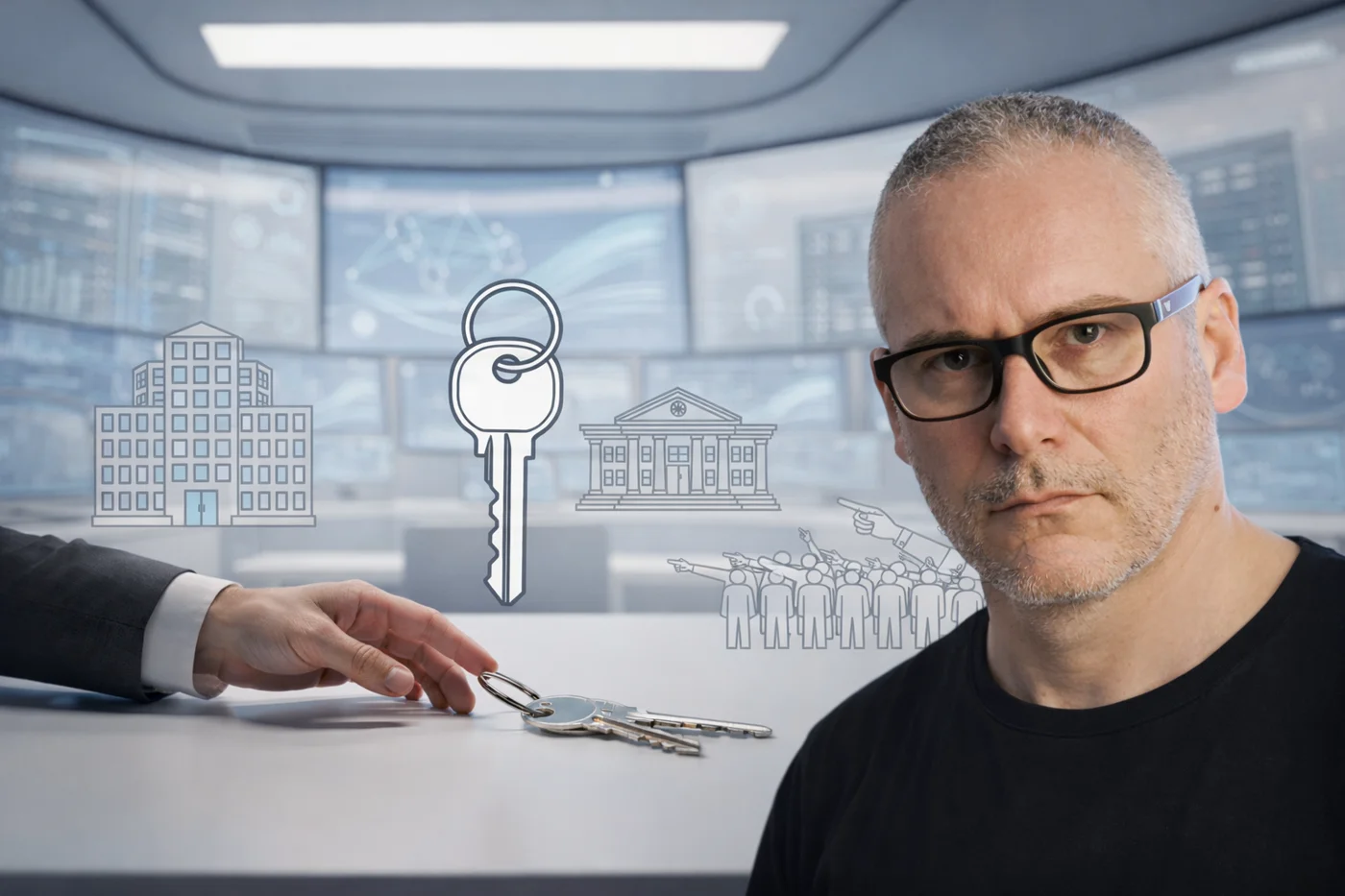
The central issue is another: who decides how AI decides.
AI is a lever of power
Today, few subjects: they own the models, they control access to the data, they establish the rules, they decide what is "admissible", "visible", "optimal".
This means something simple and inconvenient: AI is not neutral.
Each model incorporates choices, priorities, values, limits. Not because it's "bad". But why did someone design it like that.
Today: few big techs control the underlying models; states compete for data and sovereignty; companies and institutions use scoring, hiring and credit algorithms without the majority of users knowing how they work or who set them.
When AI enters decision-making processes
The problem explodes when AI filters information, suggests actions, classifies people and risks, guides economic, social and political decisions.
At that point we are no longer talking about technology. We are talking about government of reality.
And the question is not “Does it work well?”. The question is: according to what criteria? With what possibility of protest? From whom?
The invisible risk: asymmetry
The biggest danger is not the AI that makes mistakes. It's the asymmetry of power.
When few understand the system, very few can change it, almost no one can audit it… the problem is not technical. It's democratic.
Opaque, pervasive, decision-making technology is not just innovation. It's concentrated power.
Regulation is not enough
Thinking that one law is enough is an illusion. To think that corporate ethics are enough is naive.
We need something more difficult: widespread technological literacy, real transparency, possibility of audit and dissent.
Not to stop AI. But not to suffer it.
Because a system you can't understand is a system you can't govern.
The blind spot
There is a truth that we struggle to accept: AI will not decide whether it is dangerous. The power structures that use it will decide this.
AI amplifies what already exists: visions, interests, inequalities. Technology doesn't create the problem. He scales it.
🔥 Your location matters here
In your opinion, who should really hold the keys to AI?
A → companies S → the State / institutions C → community, open source, distributed models
Write A, S or C in the comments and explain why (even in two lines).
In the next episode we will talk about work, skills and a question that has been asked the wrong way for years: AI will not take away our jobs. But who decides will change.
If you want to follow the series, stay here.
From now on, control is no longer just a technical question.